
Human-in-the-Loop Models Minimize Hallucination
Artificial intelligence models, particularly large language models and generative AI systems, have made remarkable advancements in recent years. However, one of the persistent challenges in AI-generated content is hallucination—instances where AI produces incorrect, misleading, or entirely fabricated information. Hallucinations can undermine the reliability of AI, making it crucial to develop mechanisms that reduce such errors. Human-in-the-loop (HITL) models have emerged as an effective solution to this problem, combining human expertise with machine learning capabilities to enhance accuracy and trustworthiness.
Human-in-the-loop models function by integrating human supervision at different stages of AI training, validation, and deployment. Unlike fully automated AI systems, these models allow human experts to intervene, correct errors, and refine outputs. This iterative feedback loop helps AI learn from its mistakes, reducing the likelihood of hallucinations. For instance, during the training phase, humans review AI-generated responses, flag inaccuracies, and provide corrections. This ensures that the AI system gradually improves its ability to distinguish between factual and fabricated content.
One of the key ways in which HITL models minimize Al hallucination detection and accuracy improvement is by reinforcing fact-checking mechanisms. AI models rely on vast datasets, but without proper guidance, they may generate responses based on incomplete, outdated, or irrelevant information. Human reviewers verify AI outputs against reliable sources, preventing the spread of misinformation. This is especially important in fields such as medicine, law, and journalism, where accuracy is critical. By incorporating human oversight, AI-generated content aligns more closely with verified knowledge, reducing errors that could mislead users.
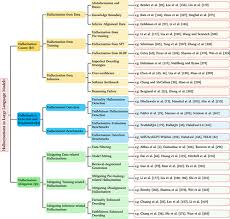
How Do Human-in-the-Loop Models Minimize Hallucination?
Another advantage of HITL models is their ability to handle ambiguous or nuanced queries more effectively. AI systems sometimes struggle with contextual understanding, leading to misinterpretations or biased conclusions. Humans, on the other hand, can analyze context, intent, and the underlying meaning of queries, ensuring that AI-generated responses are appropriate and relevant. This collaborative approach helps fine-tune the model’s ability to handle complex questions, reducing the chances of producing misleading or nonsensical outputs.
The continuous learning aspect of human-in-the-loop models also plays a crucial role in minimizing hallucinations. AI models improve over time through iterative training, and human feedback acts as a guiding force in this learning process. By regularly updating training data with human-reviewed content, AI systems can adapt to new information, emerging trends, and evolving language patterns. This dynamic approach prevents models from relying on outdated or incorrect data, further improving the accuracy of their responses.
Despite the effectiveness of HITL models in reducing hallucinations, challenges remain in scaling human oversight. Reviewing every AI-generated response manually can be resource-intensive and time-consuming. To address this, researchers are exploring hybrid approaches where AI first filters and prioritizes potential hallucinations before human reviewers intervene. This selective review process optimizes efficiency while maintaining high accuracy standards. Additionally, advancements in reinforcement learning with human feedback (RLHF) enable AI to learn from human preferences, further refining its ability to generate factually sound responses.
Human-in-the-loop models offer a robust solution to the problem of AI hallucinations by integrating human expertise with machine intelligence. Through continuous feedback, fact-checking, contextual analysis, and iterative learning, these models significantly enhance AI accuracy. While challenges remain in scaling human involvement, ongoing research and hybrid approaches are making HITL systems more efficient. As AI continues to evolve, the integration of human oversight will remain a critical factor in ensuring the reliability and trustworthiness of AI-generated content.
